Most CSS attempts do not begin with too little material. They begin with too many PDFs, lectures, groups, and conflicting plans. The first job is not to collect everything. It is to build a preparation system that produces recall, decisions, and written answers.
Start with the exam map, not an academy booklist
Before choosing teachers or notes, separate the exam into its actual stages: MPT, the written examination, medical examination, psychological assessment, and viva voce. Then separate the written stage into compulsory and optional papers. This prevents an urgent-looking resource from taking time away from a real requirement.
Read the current FPSC rules and syllabus yourself. Third-party explanations can help, but they should never become the controlling source for eligibility, subject groups, dates, or paper requirements. Keep a short list of official links and date each rule-related note so an old screenshot cannot quietly become your plan.
Rules
Confirm eligibility, attempts, age treatment, and the current application process from FPSC.
Syllabus
Turn every paper into a finite list of topics instead of an unlimited reading project.
Past papers
Use them early to see what the syllabus becomes when an examiner asks a question.
Use the first week as a diagnostic
Do not spend the first week making a six-month timetable. Spend it finding your starting point. Attempt a short MPT set without preparation. Write one essay outline. Summarise one current-affairs article from memory. Read one past-paper question from each likely optional subject and sketch how you would answer it.
The purpose is not to score well. It is to identify where effort is currently leaking. A candidate who reads confidently but cannot produce a thesis needs a different first month from a candidate who writes well but repeatedly misses MPT basics.
Recall gap
You recognise material but cannot reproduce dates, examples, or definitions without looking.
Structure gap
You know the topic but cannot turn it into a thesis, headings, and a line of argument.
Coverage gap
You have not yet touched major syllabus areas or compulsory-paper requirements.
Define what a useful study session produces
Hours are an input, not evidence of progress. Every session should end with something that can be checked later: an MPT score, a reviewed mistake, a saved fact with a source, a topic map, a PEEL paragraph, or a timed answer.
This changes the question from “What should I read today?” to “What should I be able to recall or write by the end of this session?” Reading still matters, but it now has a stopping point.
A realistic first 30 days
The first month should build repeatable habits while the optional-subject decision is still being tested. Keep the routine small enough to survive an imperfect week.
Week 1: diagnose
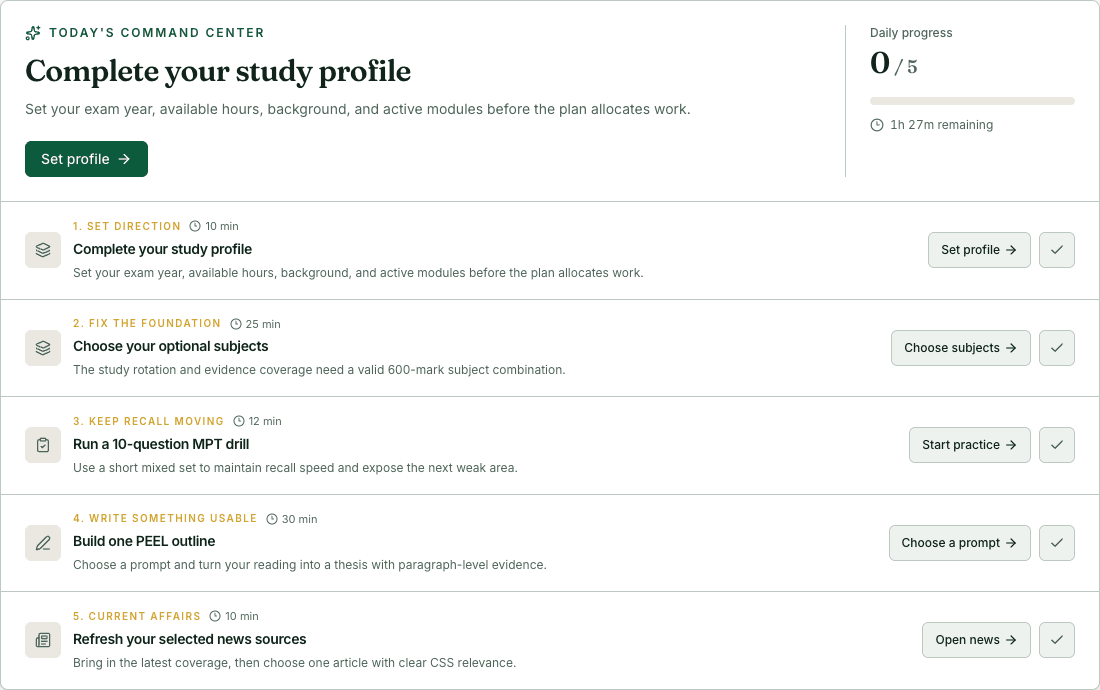
Map the exam, attempt a baseline MPT set, test possible optionals, and write one outline.
Week 2: choose
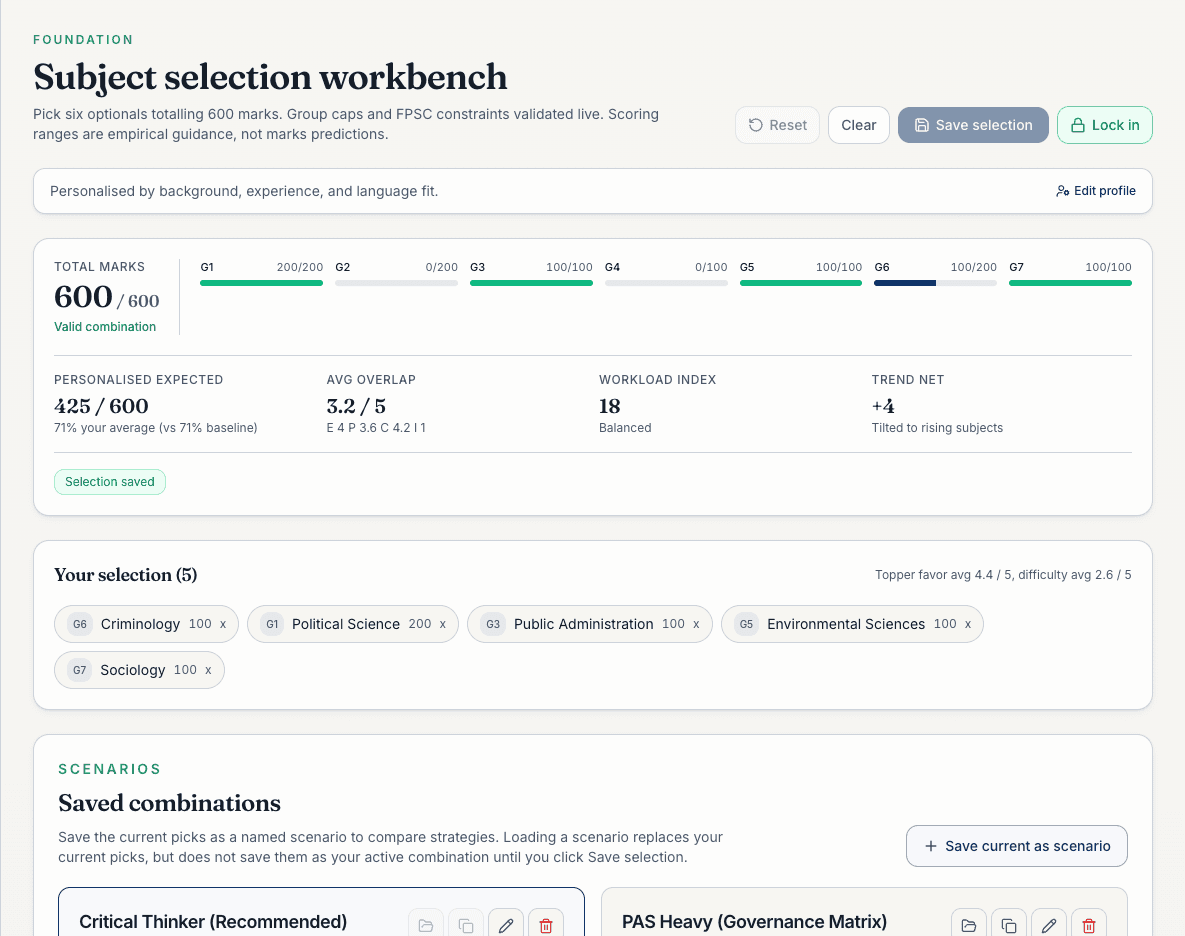
Narrow optional subjects using rules, background, syllabus volume, and answer fit.
Week 3: produce
Begin topic maps, short answer writing, and a sourced current-affairs factbook.
Week 4: review
Repeat MPT mistakes, retrieve saved facts, and rewrite the weakest paragraph from the month.
Avoid the three common false starts
The first false start is downloading material for every paper before testing whether it is useful. The second is copying a topper's timetable without their background, attempt history, or available hours. The third is postponing writing until the syllabus feels complete.
A CSS syllabus never feels fully complete because every topic can expand. Start answer production early. The gaps exposed by writing will tell you what to study next more accurately than another generic booklist.
The practical takeaway
For the first month, measure completed outputs rather than hours spent: one valid subject decision, one attempted MPT set, one recalled fact, or one written paragraph.