MPT preparation becomes inefficient when every question is treated as fresh content. The fastest gains usually come from finding the category costing marks, understanding why each mistake happened, and proving the correction on a later attempt.
Treat MPT as a separate screening problem
The MPT determines whether you can proceed to the written application stage, but its preparation method is different from long-form CSS papers. Recognition, elimination, recall speed, and time management matter more than essay-style depth.
Always verify the current MPT requirements, schedule, and instructions from FPSC. Dates and administrative details are time-sensitive; a saved social post is not a substitute for the current notice.
Begin with a category baseline
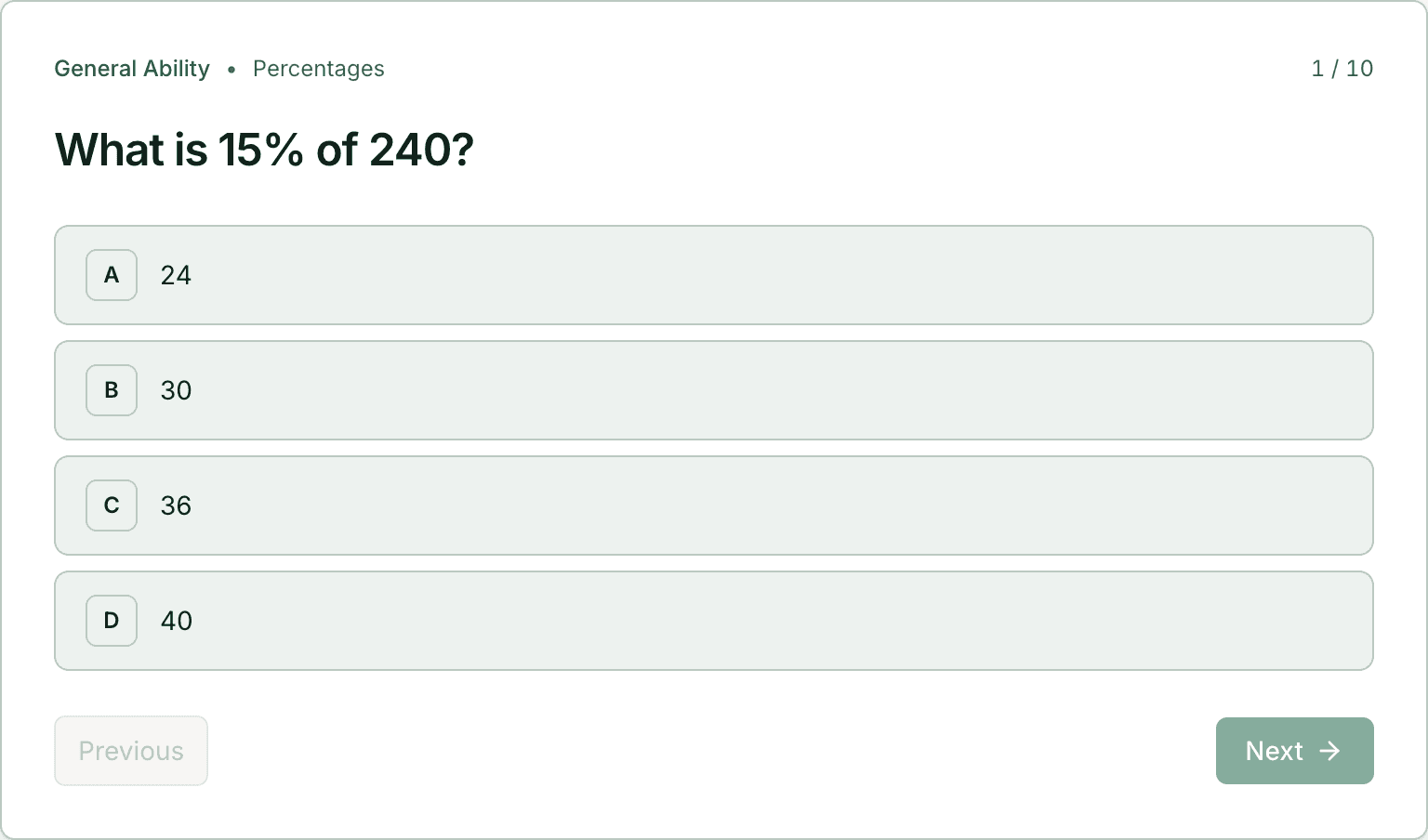
Take a short mixed set before starting a long course. Record accuracy by category rather than looking only at the total. Two candidates with the same score may need completely different plans if one loses marks in English and the other in General Ability.
For each wrong answer, label the cause: unknown fact, misunderstood concept, calculation error, weak elimination, or rushed reading. This turns a score into instructions.
Use a four-step practice loop
Attempt
Answer a short category set without checking notes during the question.
Explain
State why the correct option is right and why your selected option failed.
Record
Save the minimum correction: a rule, method, distinction, or dated fact.
Retry
Return to the missed question later. A correction is not proven until recall survives the delay.
Separate static preparation from current information
English rules, arithmetic methods, logical reasoning, and much of general knowledge can be revised from a stable bank. Current affairs, office-holders, recent reports, and changing international developments need a dated source and regular maintenance.
Do not contaminate a reliable static bank with time-sensitive answers that are no longer checked. Keep a rolling current-affairs set with source dates, and retire or update questions when the answer changes.
Use mocks to test pacing, not to replace learning
A full mock is valuable after you have corrected category-level weaknesses. It shows whether accuracy survives time pressure and whether one section consumes too much time.
After a mock, return to category practice. Repeating full papers without analysing errors can produce many scores while leaving the same weak concepts untouched.
A simple weekly MPT rhythm
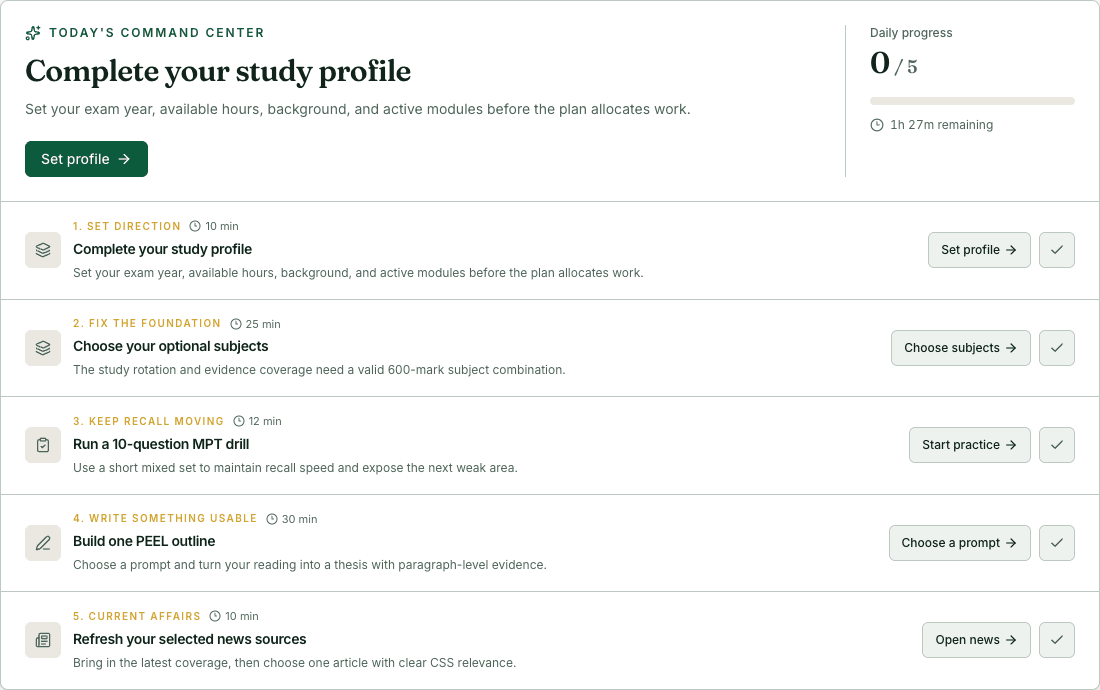
Use three short category sessions, one mixed set, and one mistake-review session each week. Add a timed mock when the test is close enough that pacing needs regular rehearsal.
Track only a few signals: attempts completed, category accuracy, unresolved mistakes, and best timed score. More dashboards do not create more recall.
The practical takeaway
Use short sets for learning and full mocks for pacing. Every wrong answer should either become a corrected rule, a revised fact, or a question scheduled for another attempt.