Essay practice often fails in one of two ways: candidates keep reading because they do not feel ready to write, or they collect scores and general comments without rewriting the draft. Improvement happens between the first attempt and the corrected one.
Begin by answering the exact prompt
Underline the subject, command, scope, and any limiting phrase. A polished essay can still fail if it answers a nearby topic instead of the one given.
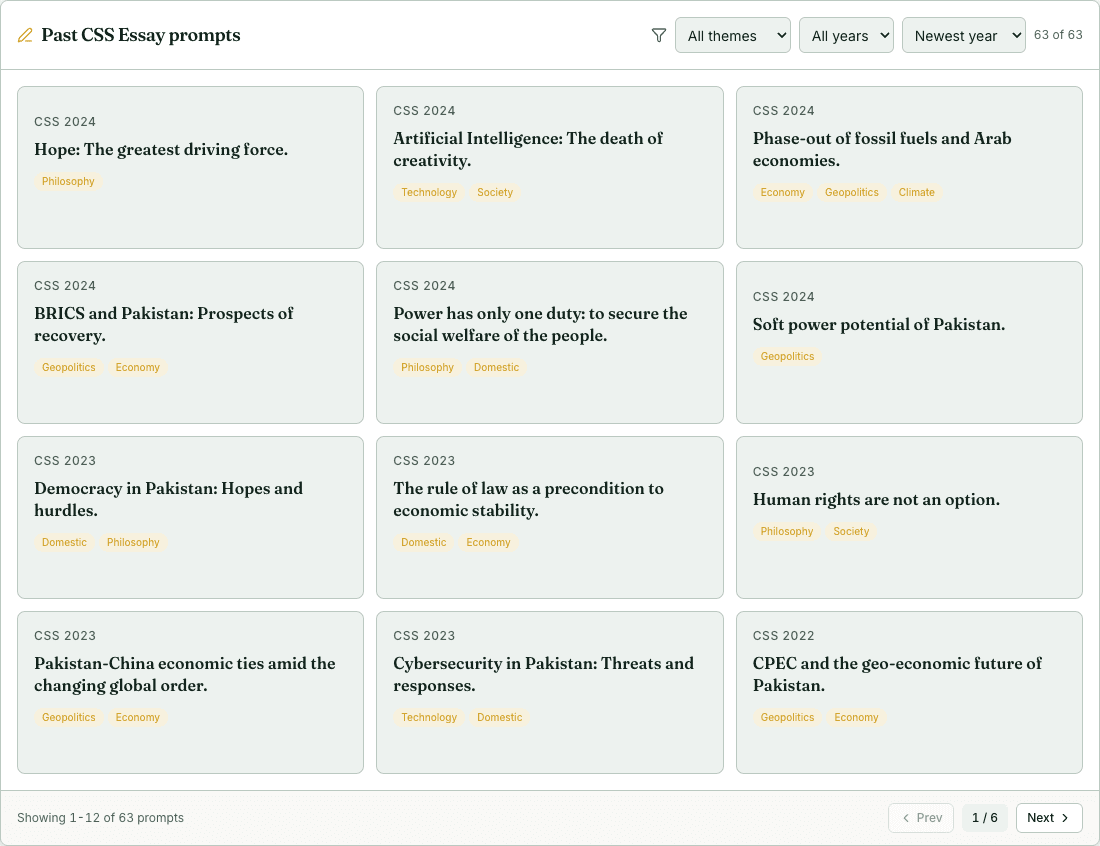
Turn the prompt into a question, then write a one-sentence answer. That sentence is the starting thesis. It should make a debatable claim and indicate the direction of the argument, not merely announce that the topic has many dimensions.
Use the outline to test logic before prose
An outline is not a decorative list of headings. Each body paragraph should do a distinct job in proving the thesis. If two headings make the same point, merge them. If a heading has no evidence or explanation, it is not ready.
A practical paragraph plan is PEEL: point, evidence, explanation, and link. The point makes a claim. Evidence grounds it. Explanation shows why the evidence proves the claim. The link returns the paragraph to the thesis or moves the argument forward.
Use evidence as support, not decoration
A statistic or quotation does not improve an essay merely by appearing. Introduce the source, state the evidence accurately, and explain its significance. One well-used example is stronger than several disconnected numbers.
Build evidence by theme rather than memorising separate lists for every possible topic. Governance, demography, climate, education, technology, and political economy can support multiple prompts when the connection is genuine.
Replace description with analytical movement
Description tells the reader what happened. Analysis explains causes, mechanisms, consequences, trade-offs, limits, and alternatives. After each factual sentence, ask “so what?” and “under what conditions is this true?”
Include counterarguments where they materially test the thesis. A counterargument is not a ritual paragraph beginning with “on the other hand.” It should represent a credible competing explanation or policy risk, followed by a reasoned response.
Use a practice ladder instead of waiting for full essays
10 minutes
Decode one prompt and write a thesis.
25 minutes
Build a complete outline with evidence and counterargument.
45 minutes
Write the introduction and two body paragraphs.
Exam conditions
Complete the full essay with a fixed planning and writing budget.
Turn feedback into the next version
Separate feedback into priorities: thesis and task response, structure, evidence, analysis, language, and presentation. Fix the highest-level problem first. Editing commas cannot rescue an essay whose argument does not answer the prompt.
AI feedback can act as a second reader for structure, repetition, grammar, and paragraph-level gaps. It should not invent facts or replace human judgment. Keep the rubric visible, check factual claims, and compare feedback against the actual paragraph.
Finish by rewriting something. A corrected paragraph creates a new skill; a saved feedback report does not.
The practical takeaway
Do not end a practice session at feedback. Rewrite the weakest thesis, paragraph, or transition while the problem is still visible.